 이 누리집은 대한민국 공식 전자정부 누리집입니다.
go.kr 주소를 사용하는 누리집은 대한민국 정부기관이 관리하는 누리집입니다.
이 밖에 or.kr 또는 .kr등 다른 도메인 주소를 사용하고 있다면 아래 URL에서 도메인 주소를 확인해 보세요.










- 공연
- 교육
- 이용안내
- 소식 · 참여
- 극장소개
-
빠른예매
-
추천공연
-
2026-2027 국립극장 레퍼토리시즌
- 국립국악관현악단 <추석엔 국악가요>
- 2026 세계음악극축제 : 혜성컴퍼니 <백만사>
- NT Live <서쪽 나라의 멋쟁이>
- NT Live <모두가 나의 아들>
- NT Live <더 피프스 스텝>
- 국립무용단 <더블빌:시나위>
- [2026 SPAF] 화성학 실습
- [2026 SPAF] 소아페라, 인스톨레이션
- 2026 <정오의 음악회> 10월
- [2026 SPAF] 찰나의 찰나
- [2026 PAMSxSPAF] 메타발레: 비(非)-코펠리아 선언
- 국립발레단 <청년교육단원 갈라 콘서트>
-
국립합창단 청년교육단원 결과보고회
- [2026 SPAF] 문라이트 오키나와
- <2026 대한민국 전통춤 축제>
- 국립창극단 <완창판소리> 10월
- SNU공연예술센터 바른노래프로젝트 <바른노래 - 머무는 빛>
- 2026 <정오의 음악회> 11월
- 국립무용단<2026 안무가 프로젝트>
- 국립창극단 <2026 창극 작가 프로젝트 시연회>
- 국립창극단 <완창판소리> 11월
- 서울예술단 창작가무극 <백범>
- 국립국악관현악단 관현악시리즈Ⅱ <2026 디스커버리>
- 국립창극단 <오이디푸스>
- 국립극장 마당놀이 <춘풍처도 온다>
-
양방언 솔로 데뷔 30주년 기념 공연
- 국립심포니콘서트오케스트라 <베토벤 교향곡 9번 '합창'>
- 2026 <정오의 음악회> 12월
- 국립합창단 <한국 가곡의 모든 것>
- 국립국악관현악단 <2026 윈터 콘서트>
- 국립극장 기획 <다정히 세상을 누리면>
- 국립무용단 <향연>
- 국립창극단 <2026 송년판소리-소리정담>
- 국립창극단 <2026 송년음악회-어질더질>
- 국립오페라단 <신년음악회>
- 트위스트 1971 공연제작소 <리턴 투 햄릿>
- 국립국악관현악단 <2027 신년 음악회>
- 국립무용단 <2027 축제>
- 2027 <정오의 음악회> 3월
- 극공작소 마방진 <리어왕외전>
- 국립창극단 <절창 Ⅶ>
- 국립국악관현악단 관현악시리즈III <음악 오디세이: 거상>
- 국립창극단 <완창판소리> 3월
- 국립무용단 <파이브 바이브>
- 국립무용단 <미인>
- 2027 <정오의 음악회> 4월
- 국립극장 기획 <2027 함께, 봄>
- 국립창극단 <리어>
- 국립국악관현악단 어린이 음악회 <신나락 만나락>
- 국립극단 <파우스트>
- 국립창극단 <완창판소리> 4월
- (주)문컴퍼니 <노인과 바다>
- 국립합창단 <오월의 화음>
- 2027 <정오의 음악회> 5월
- 국립창극단 <완창판소리> 5월
- 국립국악관현악단 <애주가>
- 국립무용단 X 허용순(가제)
- 국립극장 기획 <카운트 나인>
- 국립국악관현악단 관현악시리즈IV <신보(新譜)>
- 국립창극단 <완창판소리> 6월
- 국립창극단 <춘향>
- [패키지] 26-27 프리패키지 S - I
- [패키지] 26-27 프리패키지 R - I
- [패키지] 2026 세계음악극축제 달오름 패키지
- [패키지] 2026 세계음악극축제 올패스 패키지
- [패키지] 26-27 완창판소리 I
- [패키지] 26-27 NT Live Ⅰ
- [패키지] 26-27 정오의 음악회 I
-
추천공연
2025년 10월호 Vol. 423
목차 열기미국, 존 F. 케네디 공연예술센터 <퍼레이드>
예술로 시대를 비추다
미국 공연예술의 현재와 미래가 교차하는 곳.
전통과 혁신을 잇는 이곳은 예술을 통해 사회와 끊임없이 대화해 왔다.
John F. Kennedy Center for the Performing Arts <Parade>
Illuminating Our Times with the Arts
This is where the present and future of America’s performing arts cross each other.
This is also where tradition and innovation meet. The venue has continued its conversation with society through art.
 \
\전통과 혁신의 무대
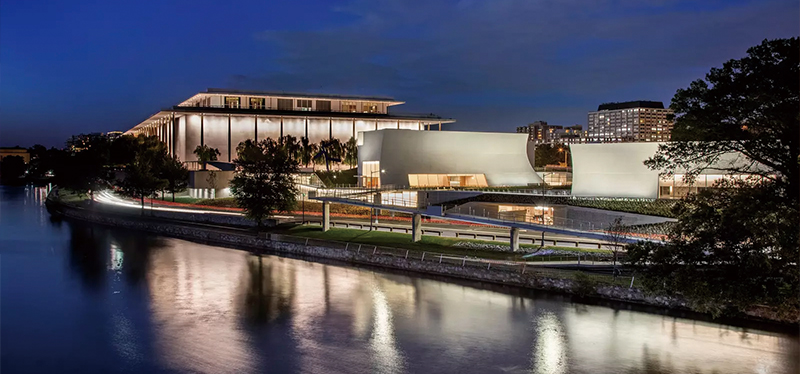
워싱턴 D.C. 포토맥 강변, 강바람이 시원하게 불어오는 자리에는 미국 공연예술의 심장, 존 F. 케네디 공연예술센터(이하 케네디센터)가 우뚝 서 있다. 1971년 문을 연 이 극장은 단순한 공연장이 아니다. 오페라부터 뮤지컬·무용·클래식음악·연극에 이르기까지 다양한 장르가 어우러진 복합 예술을 보여주는 곳으로 전통과 현대, 정통성과 실험을 동시에 경험할 수 있는 독창적 환경을 갖추었다.
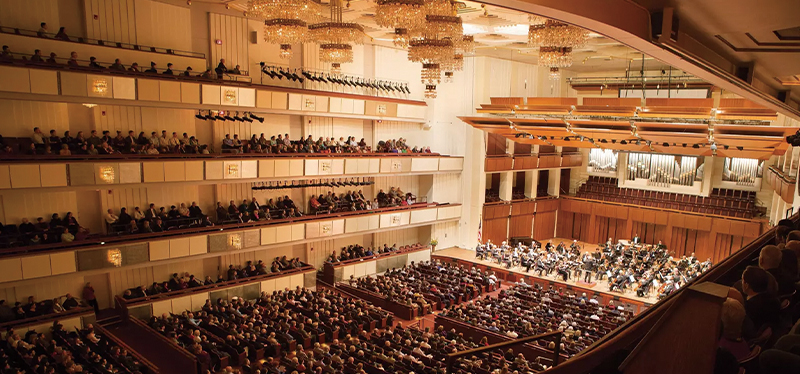
대형 오페라하우스를 비롯한 콘서트홀, 중형의 아이젠하워극장, 소규모 테라스극장과 패밀리극장까지 다양한 무대가 공존하며, 각 공간은 장르와 규모에 맞는 최적의 환경을 제공한다. 관객들은 화려한 오페라와 깊이 있는 교향 음악부터 실험적 연극, 신진 예술가의 창작 공연까지 폭넓은 스펙트럼의 공연예술을 만날 수 있다.
2019년에는 케네디센터 최초의 확장 프로젝트인 ‘더 리치’가 문을 열었다. 이 현대적 공간은 오픈 스튜디오, 다목적 리허설실, 교육시설, 카페 등을 갖추어 예술가와 방문객들에게 창작과 학습의 장을 제공한다. 넓은 야외 공간과 녹지 지붕은 도심과 자연의 조화를 이루며 지하도로 연결되어 접근성도 뛰어나다.
케네디센터가 지금의 살아 있는 기념비로 자리 잡기까지의 여정은 쉽지 않았다. 1950년대 중반, 미국이 제2차 세계대전 후 세계 문화 강국으로 자리매김하던 시기에 아이젠하워 대통령은 국립문화센터 설립을 제안했다. 당시 국회와 시민사회는 새로운 문화공간의 필요성에 공감하며 1958년 법안을 통과시켰고, 존 F. 케네디 대통령은 프로젝트를 자신의 핵심 과제로 삼아 백악관 후원 행사와 대규모 모금 운동을 주도했다. 그의 불의의 죽음 후, 센터는 존 F. 케네디 대통령의 ‘생전 기념비’로 공식 지정되어 국민의 기억 속에 깊이 새겨졌다. 1971년, 레너드 번스타인의 감동적인 추모 미사곡과 함께 문을 연 이 무대는 공공성과 예술성을 갖춘 국립극장으로 자리 잡았다.
케네디센터는 공연장 역할뿐 아니라, 청소년 대상 교육 프로그램과 신진 예술가 발굴에 힘쓰며 ‘밀레니엄 스테이지’ 무료 공연을 통해 지역사회와 소통을 이어가고 있다. 관객층 저변을 넓히고 예술의 가치를 실천하는 열린 공간의 역할을 하고 있다. 뉴욕의 브로드웨이가 상업 뮤지컬의 중심이라면, 케네디센터는 국립극장으로서 사회적 책임과 예술 혁신을 동시에 추구하며 미국 공연예술의 권위와 폭넓은 스펙트럼을 보여 주는 상징적 공간으로 자리매김했다.
Stage of Tradition and Innovation
Along the Potomac River in Washington D.C., the breeze is so re freshing. Here, you can find the lofty structure of the John F. Kennedy Center for the Performing Arts (or simply the Kennedy Center) which is at the heart of America’s performing arts. Opened in 1971, it isn’t just a theater. It is where you can enjoy multidisciplinary performances encompassing operas, musicals, dances, classical music concerts and plays. It offers an original environment for experiencing tradition and modernity, classicality and experimentality all at once.
The Kennedy Center has different performance spaces: large Opera House and Concert Hall, mid-sized Eisenhower Theater as well as smaller Terrace Theater and Family Theater. Each space boasts an optimum environment fit for a specific genre and size. This leads the Center to offer such a wide range of shows: colorful opera, majestic symphony, experimental play and creative performance by a young artist.
The REACH, the Center’s first extension, opened in 2019. This modern space has open studios, a multi-purpose rehearsal room, educational facilities and a coffee shop, providing artists and visitors with a space for creation and learning. Its spacious outdoor space and green rooftop harmonizes with the city center and nature. It is also connected to the underground passage, making itself highly accessible.
However, it wasn’t easy for the Center to grow into today’s living memorial. In the mid-1950s, the US was making itself a cultural superpower after World War Ⅱ. At that time, President Eisenhower suggested establishing a national cultural center. As the US Congress and civil society felt the need to have a new cultural venue, the bill was passed in 1958. President John F. Kennedy then considered this his administration’s core project, taking the lead in White House-sponsored events and large-scale fundraising campaigns. After his tragic death, the Center was officially designated as his living memorial, leaving his footprints deep inside American people’s memory. In 1971, the Center opened with Leonard Bernstein’s touching Mass commemorating the late president. Ever since then, it has become a national theater with publicness and artistic value.
The Kennedy Center not only serves as a theater but it is also committed to offering educational programs for teens and to discovering young artists. It keeps communicating with the local community through free shows at its Millennium Stage. The Center plays a role as an open venue attracting more people and making artistic value a reality. While New York’s Broadway is at the center of commercial musicals, the Kennedy Center pursues social responsibility and artistic innovation as a national theater. In this context, it has established itself as a symbolic place illustrating the authority and wide spectrum of America’s performing arts.
역사를 노래하는 뮤지컬
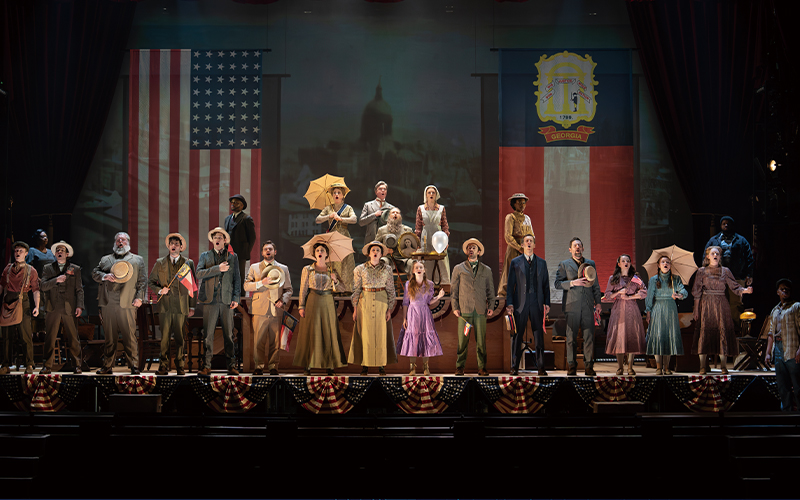
케네디센터는 지난 8월 19일부터 9월 7일까지 뮤지컬 <퍼레이드>를 선보였다. 이 작품은 토니상 최우수 리바이벌 뮤지컬상을 받으며 강렬한 울림으로 관객과 평단의 주목을 받았다.
1913년 조지아주 애틀랜타에서 실제로 벌어진 사건을 바탕으로 하는데, 신혼부부 레오 프랭크와 루실 프랭크가 남부의 낯선 땅에서 새로운 삶을 시작한다. 레오는 곧 끔찍한 범죄의 누명을 쓰게 되고, 이를 헤쳐 나가는 과정이 펼쳐진다. 사회적 압박과 편견 속에서도 두 사람은 서로를 의지하며 진실과 정의를 추구하고, 작은 마을 사회의 광기와 집단심리가 개인의 삶을 어떻게 뒤흔드는지도 보여 준다. 역사적 비극 속에서도 인간의 존엄과 사랑의 힘이 중심을 이루며, 서로를 진실하게 바라볼 때 비로소 사랑할 수 있다는 메시지를 전한다.
주변 인물들도 작품의 메시지를 형성하는 중요한 역할을 한다. 사건의 희생자로 등장하는 메리 페이건은 극의 긴장감을 높이고, 10대 후반의 남부 시골 소녀 역할을 맡은 에시 메이와 몬틴 스토버는 합창과 무용 장면에 활력을 불어넣는 조연으로 활약했다. 법정과 관공서 인물 역할의 휴 도르시와 슬레이튼 주지사는 사회적 긴장과 정의 구현에 대한 주제를 무게감 있게 전달한다. 다수의 조연과 단역들은 극의 리얼리티를 더해 주며, 관객이 다양한 사회 계층과 상황을 입체적으로 받아들일 수 있도록 했다.
합창 장면에서는 단순히 여러 목소리가 어우러지는 것을 넘어, 관객이 사회적 광기의 압도적 긴장감을 피부로 느낄 수 있도록 연출되었다. 각 인물의 목소리와 악기 소리가 겹치면서 무대 전체가 심리적 공명을 만들어 내고, 객석에서는 숨을 죽인 채 몰입하는 관객들의 긴장과 감탄이 동시에 느껴진다.
독창과 이중창에서는 주인공들이 겪는 내적 갈등과 외부의 압박이 세밀하게 드러나며, 관객은 자연스럽게 그 감정의 흐름에 동참하게 된다. 레오와 루실의 이중창 장면에서는 절망 속에서도 서로를 신뢰와 사랑의 눈길로 바라보는데 그 감정이 음악과 함께 폭발적으로 전해지며, 관객들은 숨소리 하나까지 집중하며 극적 감동을 직접 체험하게 된다. 이러한 장면들은 공연이 단순한 역사 재현을 넘어, 관객에게 직접적인 감정적 경험과 사회적 성찰을 동시에 제공한다는 점을 부각했다.
연출은 토니상 수상자 마이클 아든, 대본은 퓰리처상과 아카데미상을 받은 알프레드 유리, 음악과 가사는 세 차례 토니상을 받은 제이슨 로버트 브라운이 담당했다. 또한 전설적 연출가 해럴드 프린스가 공동 구상에 참여해 작품의 완성도를 높였다.
평단은 <퍼레이드>를 “브로드웨이 리바이벌 중에서도 가장 강렬한 작품”으로 평가했다. 뉴욕타임스는 “흥미진진하면서도 희망적이고, 관객에게 깊은 울림을 주는 무대”라고 했고, 워싱턴 포스트는 “비극적 사건과 음악적 스토리텔링의 힘을 동시에 보여주는 놀라운 공연”이라고 호평했다.
케네디센터가 역사적 비극과 인간의 존엄을 다룬 <퍼레이드>를 선보인 것은 공연예술이 사회적 기능과 시대적 메시지를 동시에 전달할 수 있음을 보여 주는 사례로 상징성을 갖는다. 이 공연은 과거의 편견과 차별을 환기하며, 오늘날 우리가 서로를 이해하고 사랑하는 방식에 관해 묻는다. 공연예술이 단순한 무대가 아니라, 시대의 목소리를 담아내고 인간의 마음을 움직이는 힘을 가지고 있음을 명확히 보여 주었다.
A Musical Singing History
The Kennedy Center presented the musical <Parade> from August 19 to September 7. Winner of the Tony Award for Best Revival of a Musical, the performance captivated audiences and critics with its powerful resonance.
Based on a true story which happened in Atlanta, Georgia in 1913, the musical depicts the new life of Leo Frank and Lucille Frank who get married and come to an unfamiliar neighborhood in the American South. Soon afterward, Leo is falsely accused of having committed a terrible crime and the couple must get through this. Despite social pressure and prejudice, the husband and wife count on each other to pursue truth and justice. Meanwhile, the small village’s madness and collectiveness shake individual lives. The musical conveys the message that even amid a historical tragedy, human dignity and the power of love still count and that to love, we must truly see one another.
Those around the couple also play important roles in forming the message of the performance. Mary Phagan, the victim of the crime, raises the tension of the story. Essie May and Monteen Stover, Southern girls in their late teens, add vigor to the vocals and dances. Hugh Dorsey, who appears at the court and public office, and Governor Slaton seriously contribute to the theme of social tension and justice accomplishment. Many other supporting and minor roles make the story more realistic, enabling the audience to experience different social classes and circumstances three-dimensionally.
The chorus numbers go beyond the harmony of different voices to overwhelm the audience with social madness and tension. The overlapping voices and instrument sounds generate a psychological resonance on the entire stage. On the edge of their seats, everyone seems so absorbed, expressing their tension and admiration at the same time. Solos and duets delicately unveil the main characters’ inner conflict and external pressure, naturally leading the audience to join their emotional flow. In Leo and Lucille’s duet, the couple’s mutual trust and love amid despair explode with the music. People get to focus on every breath they take, experiencing a dramatically touching moment firsthand. Such scenes highlight how a performance could provide the audience with a firsthand emotional experience and social reflection at the same time, not just reproducing history.
The musical was directed by Tony winner Michael Arden and written by Pulitzer and Oscar winner Alfred Uhry. Its music and lyrics are from three-time Tony winner Jason Robert Brown. Legendary director Harold Prince joined the production team, contributing to the perfection of the musical.
Critics have said that <Parade> is “as commanding as any musical revival to hit Broadway.” To the New Work Times, it is “a rousing, hopeful, deeply moving show.” The Washington Post also gave a favorable review, calling it “a phenomenal demonstration of the power of musical storytelling out of tragic history.”
The Kennedy Center’s production of <Parade>, which deals with historical tragedy and human dignity, could have a symbolic meaning because it demonstrates the potential of the performing arts to play its social role and to convey the messages of our times. Reminding us of past prejudice and discrimination, the musical asks us about how we understand and love each other today. It makes clear that a performance isn’t just to be on stage; a performance has the power to share the voices of our times and to touch human hearts.
글. 양승혜 자유기고가 겸 작가. 2010년 『미주한국일보』 소설 당선으로 등단 후 뉴욕의 지역 매거진과 방송기자로 활동, 『월간객석』 등의 매체에 기고하고 있다.
By Seunghae Yang (Freelance Writer and Author) Seunghae Yang started her literary career when her novel won a prize from the Korea Times in the US in 2010. Since then, she has written for local magazines in New York while also working as a broadcast journalist. She currently writes for the monthly magazine <Auditorium> and others.
Photo by. The Kennedy Center
- 남산 정자에 꽃이 바다 같아라
- 전통춤의 매력에서 발견하는 한국춤의 정수
- 오늘 춤의 다채로운 얼굴
- 한의 강에서 피어난 희망, 춤으로 노래하는 『토지』
- 욕망과 파멸의 여정, 국립극장에서 만나는 고전
- 한국 창작 발레가 빚어내는 새로운 파동
- 그로부터 자유케 하라
- 그때의 멜로디, 지금의 감성
- 국악관현악, 명인의 산조와 접속 완료!
- 두 달 빠른 크리스마스, 국립극장에서 만나요
- 묵묵히 다져 온 30년, 그리고 첫 완창
- 같은 곡 다른 느낌, ‘국악기다움’을 찾아서
- 국립국악관현악단 서희선
- 아담에서 헌트릭스까지, 가상의 계보학
- 예술로 시대를 비추다
- 가을의 문턱, 남산에서 한강까지
- 한 명의 소리를 넘어 하나의 하모니로
- 설렘 가득한 첫걸음, 국립극장을 기록하다
- 국제 무대를 향한 새로운 발걸음
- 국립극장 소식

우) 04621 서울특별시 중구 장충단로 59 (장충동 2가, 국립극장)
/ 전화번호 :
☎02)2280-4114
국립중앙극장 / 사업자등록번호 : 203-83-00465
CopyRight ⓒ 2025 National Theater of Korea. All rights reserved.
정산대행사 : (주)컬처닷컴 대표자명 : 김기홍 사업자등록번호 : 120-87-53160 통신판매업신고번호 : 2019-서울서초-3322
우)06719 서울시 서초구 반포대로 10 신원빌딩 7층 FAX : 02)544-0966 Mail : webmaster@cnpart.com