 이 누리집은 대한민국 공식 전자정부 누리집입니다.
go.kr 주소를 사용하는 누리집은 대한민국 정부기관이 관리하는 누리집입니다.
이 밖에 or.kr 또는 .kr등 다른 도메인 주소를 사용하고 있다면 아래 URL에서 도메인 주소를 확인해 보세요.










- 공연
- 교육
- 이용안내
- 소식 · 참여
- 극장소개
-
빠른예매
-
추천공연
-
2026-2027 국립극장 레퍼토리시즌
- 국립국악관현악단 관현악시리즈Ⅱ <2026 디스커버리>
- 국립창극단 <오이디푸스>
- 국립극장 마당놀이 <춘풍처도 온다>
-
양방언 솔로 데뷔 30주년 기념 공연
- 국립심포니콘서트오케스트라 <베토벤 교향곡 9번 '합창'>
- 2026 <정오의 음악회> 12월
- 국립합창단 <한국 가곡의 모든 것>
- 국립국악관현악단 <2026 윈터 콘서트>
- 국립극장 기획 <다정히 세상을 누리면>
- 국립무용단 <향연>
- 국립창극단 <2026 송년판소리-소리정담>
- 국립창극단 <2026 송년음악회-어질더질>
- 2027 국립오페라단 <신년음악회>
- 트위스트 1971 공연제작소 <리턴 투 햄릿>
- 국립국악관현악단 <2027 신년 음악회>
- 국립무용단〈2027 축제〉
- 2027 <정오의 음악회> 3월
- 극공작소 마방진 <리어왕외전>
- 국립창극단 <절창 Ⅶ>
- 국립국악관현악단 관현악시리즈III <음악 오디세이: 거상>
- 국립창극단 <완창판소리> 3월
- 국립무용단<파이브 바이브>
- 국립무용단 <미인>
- 2027 <정오의 음악회> 4월
- 국립극장기획<2027 함께, 봄>
- 국립창극단 <리어>
- 국립국악관현악단 어린이 음악회 <신나락 만나락>
- 국립극단 <파우스트>
- 국립창극단 <완창판소리> 4월
- (주)문컴퍼니 <노인과 바다>
- 국립합창단 <오월의 화음>
- 2027 <정오의 음악회> 5월
- 국립창극단 <완창판소리> 5월
- NT Live <진지함의 중요성>
- NT Live <위험한 관계>
- 국립국악관현악단 <애주가>
- 국립무용단 <겹>
- 국립극장 기획 〈카운트 나인〉
- 국립국악관현악단 관현악시리즈IV <신보(新譜)>
- 국립창극단 <완창판소리> 6월
- 국립창극단 <춘향>
- [패키지] 26-27 프리패키지 S - I
- [패키지] 26-27 프리패키지 R - I
- [패키지] [매진] 26-27 정오의 음악회 I
- [패키지] 26-27 프리패키지 S - Ⅱ
- [패키지] 26-27 프리패키지 R - Ⅱ
- [패키지] 26-27 정오의 음악회 II
- [패키지] [매진] 26-27 완창판소리 II
- [패키지] 26-27 NDCK 패키지
- [패키지] 26-27 NT Live Ⅱ
-
추천공연
2025년 8월호 Vol. 421
목차 열기폴란드 바르샤바 국립극장 <고도를 기다리며>
고도, 기다림과 희망의 초상
이 작품은 단지 연극이 아닌, 폴란드의 역사적 기다림과 정체성을 되짚는 거울이라 할 수 있다.
National Theatre, Warsaw <Waiting for Godot>
Godot, a Portrait of Waiting and Hoping
This is not just a play but a mirror reflecting Poland’s historical waiting and identity.
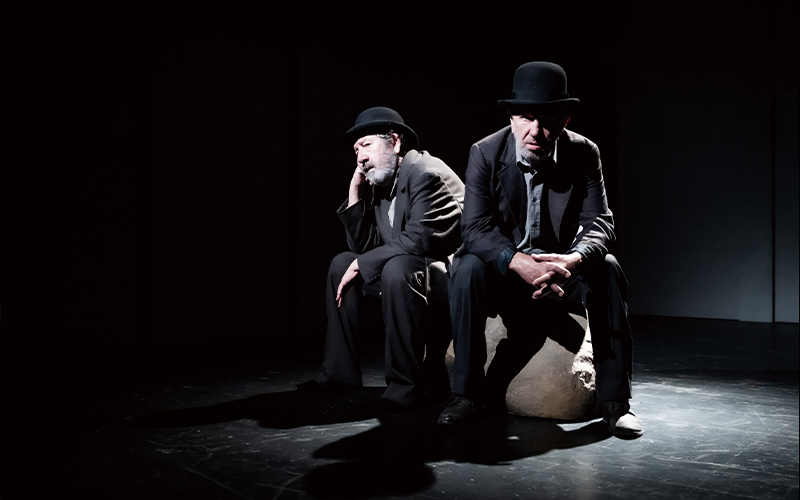
사뮈엘 베케트의 『고도를 기다리며』는 부조리극의 상징을 넘어, 20세기 문학과 연극을 통틀어 가장 근원이 되는 질문인 ‘존재란 무엇인가’ ‘기다림은 무슨 의미를 지니는가’ 그리고 ‘그 기다림이 영원히 이어진다면, 우리는 어떤 방식으로 견딜 수 있는가’를 던지는 작품이다.
이 작품은 지난 5월부터 바르샤바 국립극장 무대에 올라 관객과 만나고 있으며, 오는 9월에도 다시 막을 올릴 예정이다. 연출은 폴란드 연극계의 거장인 피오트르 체플락 감독이 맡았고, 무대에는 마리우시 베노이트, 예지 라지비워비치, 바르토미에이 보브롭스키, 체자리 코신스키 등 폴란드 대표 배우들이 함께했다. 이 공연의 진정한 의미는 단지 고전을 무대에 다시 올렸다는 데 그치지 않는다. 폴란드의 역사, 그리고 국립극장이 지닌 정체성의 뿌리와 만났기 때문이다.
Samuel Beckett’s <Waiting for Godot> goes beyond symbolizing the theater of the absurd; it asks the most fundamental questions encompassing 20th-century literature and theater as follows. What is existence? What does “waiting” mean? And if such waiting lasts forever, how could we endure it?
The play has met audiences at the National Theatre in Warsaw since last May and it will welcome them again this coming September. Its director is Piotr Cieplak, a virtuoso of the Polish theater, and it stars the country’s representative actors such as Mariusz Benoit, Jerzy Radziwiłowicz, Bartłomiej Bobrowski and Cezary Kosiński. This performance finds its true meaningfulness not just in staging the classic again. Going further than that, the play connects itself to the history of Poland and to the root of the National Theatre’s identity.
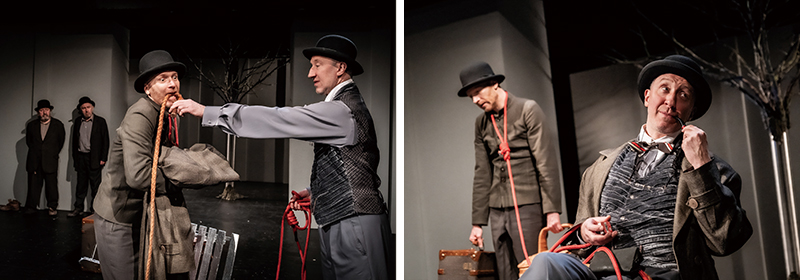
1953년 파리에서 초연된 이 작품은 당시에도 철학적·정치적 암시로 해석되었지만, 폴란드에서의 이번 상연은 그 자체로 역사적 상징을 품고 있다. 20세기 후반, <고도를 기다리며>는 공산 체제하에서 검열되거나 제한적으로만 상연될 수 있었다. 이러한 배경 탓인지, 관객들은 작품 속 ‘고도’라는 인물을 자유, 진실, 또는 국가 회복의 은유로 받아들이게 되었다.
이번 체플락 감독의 연출은 그런 역사적 해석을 고스란히 계승한다. 반복되는 대사, 텅 빈 공간, 희망인지 착각인지 모를 막연한 기대는 곧 폴란드 국민이 수십 년 역사에서 경험해 온 ‘기다림’의 정서와 맞닿아 있다. 실제로 1980년대 공산정권이 민주화운동을 탄압하기 위해 내렸던 계엄령 시기에, <고도를 기다리며>는 폴란드의 젊은 세대에게 하나의 상징으로 간주되었다. “고도는 오지 않는다”는 절망과 동시에 “그래도 우리는 기다린다”는 희망을 안겨 준 것이다. 그렇기에 이번 무대는 단지 예술적 시도의 결과물이 아니다. 이는 폴란드 근현대사를 살아온 국민 모두에게 바치는 일종의 헌사이며, 예술을 통한 집단기억의 복원이라 할 수 있다.
무대는 잿빛 빈 공간과 마른 나무 한 그루, 돌덩이만으로 구성되어 고립과 침묵의 분위기를 극대화했다. 이 절제된 공간에서 배우들의 몸짓과 표정은 강렬하게 다가왔다. 에스트라공 역의 마리우시 베노이트와 블라디미르 역의 예지 라지비워비치는 미묘한 눈빛만으로 희망과 체념 사이를 오갔으며, 절망 속에서도 위트를 잃지 않는 연기를 통해 긴장감을 유지했다. 희미한 조명과 반복되는 침묵은 관객으로 하여금 자신의 내면을 들여다보게 만드는 효과를 발휘했다.
Back in 1953 when the play premiered in Paris, people did interpret it as having strong philosophical and political implications. But this performance in Poland is historically symbolic in itself. In the late 20th century, <Waiting for Godot> was censored by communists or presented restrictively. Such a background may have led people to interpret the play’s character “Godot” as a metaphor of freedom, truth or national restoration.
The performance directed by Cieplak keeps such a historical interpretation intact. Lines repeated by actors on stage, an empty space and a vague expectation (you couldn’t tell if it’s a hope or an illusion)… All these are linked to the sentiment of “waiting” that Polish people have experienced over several decades of their history. Indeed, at the time of the martial law that the communist regime imposed to oppress the democratization movement in the 1980s, <Waiting for Godot> had a symbolic meaning for Poland’s younger generation. They were in despair thinking that “Godot would never come” but at the same time, they didn’t lose hope, saying, “But we are still waiting.” That is why this Polish performance isn’t just a result of a certain artistic attempt. This is a kind of tribute to all Polish people who have come through their country’s modern and contemporary history. The play is also about restoring collective memory through art.
With only a withered tree and a rock in a gray, empty space, the stage maximizes the atmosphere of isolation and silence. Such a minimalist space makes the actors’ body movements and facial ex-pre ssions look even more intense. Mariusz Benoit (as Estragon) and Jerzy Radziwiłowicz (as Vladimir) oscillate between hope and resignation just with subtle changes in their eyes. Throughout the play, the two characters maintain a sense of al ertness by staying witty even in despair. The dim lighting and repeated silences lead the audience to look within themselves.
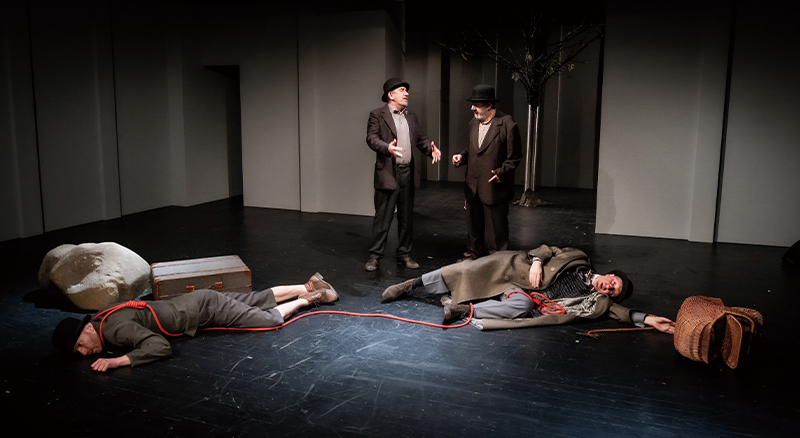
이번 공연이 이루어진 장소, 바르샤바의 국립극장은 1765년 창설 이래 단순한 공연장이 아니라, 폴란드 민족 정체성과 독립 정신의 상징으로 자리매김해 왔다. 국립극장은 제1차 세계대전, 제2차 세계대전, 그리고 냉전기까지 총 다섯 차례 불탔는데, 폴란드의 정치적 격변은 항상 이 건물의 운명과 맞물려 있었다. 특히 1830년 11월 봉기 이후, 러시아 제국은 ‘국립’이라는 이름 자체를 금지했다. 하지만 폴란드인들은 ‘국립극장’이라는 정체성을 가슴에 품은 채 연극 공연을 이어갔다. 1997년, 마침내 완전히 복원된 국립극장은 예지 그제고솁스키 연출의 <11월의 밤>으로 다시 문을 열었다. 이는 단지 극장 재개관이 아니라, 기나긴 기다림 끝의 복귀였고, 나아가 오늘날 <고도를 기다리며>와 절묘하게 겹치는 순간이다.
체플락 감독은 무대의 단조로움을 극대화해, 관객이 침묵과 어둠 속에서 각자의 ‘고도’를 생각하게 했다. 작품은 과거 독재 체제하에서 은유적 상징으로 수용되었다면, 오늘날에는 ‘우리는 무엇을 기다리는가? 우리의 고도는 여전히 존재하는가?’와 같이 더 복합적인 질문으로 변한다.
2024년, 이 공연은 코나드 스비나르스키 상, 알렉산데르 젤베로비치 상, 치프리안 카밀 노르비드 상, 그리고 2025년 제65회 칼리시 연극제에서 야체크 보슈체로비치 상을 수상하며, 예술성과 시대성을 동시에 인정받았다. 하지만 연극의 진정한 의미는 화려한 수상 기록이 아니라, 공연이 끝난 뒤 어두운 객석을 나서는 관객의 침묵 속에 있다.
<고도를 기다리며>는 답을 주지 않는다. 다만 묻는다. 그리고 기다리게 만든다. 고도는 결국 오지 않은 채로 연극은 막을 내리지만, 폴란드 국립극장은 그 기다림 속에서 오늘도 조용히 불을 밝힌다.
The National Theatre in Warsaw, which presents the performance, opened in 1765. Since then, the theater has established itself not just as a venue for the performing arts but also as a symbol of Polish people’s identity and spirit of independence. It was burned down five times during the First World War, Second World War and Cold War. In fact, Poland’s political upheavals were always interlocked with this theater’s destiny. Especially after the uprising in November 1830, the Russian Empire even banned using the adjective “national.” Nevertheless, the Polish continued to perform plays while cherishing the identity of the “National” Theatre. After its complete restoration in 1997, the theater opened again with directed by Jerzy Grzegorzewski.
It wasn’t just the theater’s reopening but its return after people’s waiting, which exquisitely overlaps with its most recent play <Waiting for Godot>.
The director Cieplak maximizes the monotony of the stage, inviting everyone to think about their own “Godot” in silence and darkness. In the past, the play was interpreted as a metaphor under dictatorship. Today, it asks us more complex questions such as “What are we waiting for?” and “Does our ‘Godot’ still exist?”
The performance was recognized for both its artistic value and historical relevance by winning the Konrad Swinarski Award, Aleksander Zelwerowicz Award and Cyprian Kamil Norwid Award in 2024 and the Jacek Woszczerowicz Award at the 65th Kalisz Theatre Meetings in 2025. But the true significance of the play is found not in its outstanding award-winning records but in the silence of the audience leaving the dark theater after the performance.
<Waiting for Godot> doesn’t give us any answer. It just asks us questions. And it makes us wait. The play ends, with Godot still not coming. But today, the National Theatre in Warsaw keeps turning its lights on quietly, amid that waiting.
Photo by. National Theatre, Warsaw
- 남산 정상의 높은 소나무
- 창극, 진화의 한계를 시험하다
- 시간을 걷는 춤, 정체성을 묻다
- 새로운 30년을 여는 국립국악관현악단
- 전통을 품은 확장, 낯선 상상과의 만남
- 다시 빛을 찾다: 음악으로 잇는 화합의 장
- 이 시대 가장 주목받는 춤의 향연
- 음향의 재발견
- 지금껏 이런 ‘심청’은 없었다, 경계를 넘어 다시 태어난 고전
- ‘상인’이 아닌 ‘상인들’, 연대의 무대로 거듭나다
- 한국 창작 음악의 지각변동
- 몸에 새긴 전통, 그리고 지금의 파동
- 존재를 부인당한 자의 르상티망 분출
- 국립창극단 이광원
- 고별은 비즈니스, 눈물은 진심
- 고도, 기다림과 희망의 초상
- 이열치열 매봉산 산책
- 전통예술 향유의 새로운 장
- 지금 다시 꺼내 보는 [젊은 날의 초상]
- 국립극장 소식

우) 04621 서울특별시 중구 장충단로 59 (장충동 2가, 국립극장)
/ 전화번호 :
☎02)2280-4114
국립중앙극장 / 사업자등록번호 : 203-83-00465
CopyRight ⓒ 2025 National Theater of Korea. All rights reserved.
정산대행사 : (주)컬처닷컴 대표자명 : 김기홍 사업자등록번호 : 120-87-53160 통신판매업신고번호 : 2019-서울서초-3322
우)06719 서울시 서초구 반포대로 10 신원빌딩 7층 FAX : 02)544-0966 Mail : webmaster@cnpart.com